
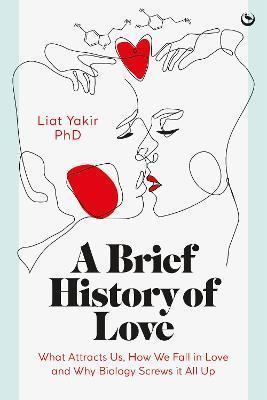
A Brief History of Love: What Attracts Us, How We Fall in Love and Why Biology Screws it All Up
Candle Safety
1. Trim your wick before burning your candle the first time and every subsequent burn thereafter.
2. We advise burning your candle for periods of no longer than three hours at a time.
3. Discontinue burning your candle when there is 10mm / 1cm of wax is remaining.
4. Always burn your candle on a stable and heat resistant surface, away from drafts or items that can catch alight.
5. Never leave a burning candle unattended, near children or pets.
6. If you’re burning more than one candle at a time, space your candles approximately 100mm (10cm) apart.
Description Many have studied it, written about it and even died for it and yet, it appears, we are mostly blind to the essence of love. Dr Liat Yakir takes us on a fascinating journey through the evolution of love in history and in modern times, showing the importance of hormones, neurons and genes that dictate who we’ll fall in love with and who we’ll reject. Rooted in scientific research and funny anecdotes, A Brief History of Love explores: why we find it so hard to find fulfilling relationships on Tinder how many potential partners do we meet before finding “the one” whether we are destined to be monogamous? the scientific recipe for reinforcing stable marital relationships With an excess of choice in the Digital world of match-making, and societal pressure to confirm to our biological clock, it is more important than ever to understand the science of love – the reasons behind our choices, how to select the right partner and how to preserve our love over time.